
This is considered probable but inestimable, because the lawsuit is very likely to occur (given a settlement is agreed upon) but the actual damages are unknown. No journal entry or financial adjustment in the financial statements will occur. Instead, Sierra Sports will include a note describing any details available about the lawsuit. When damages have been determined, or have been reasonably estimated, then journalizing would be appropriate.
- However, its actual experiences could be more, the same, or less than $2,200.
- If the contingent liability is probable and inestimable, it is likely to occur but cannot be reasonably estimated.
- If the contingent loss is remote, meaning it has less than a 50% chance of occurring, the liability should not be reflected on the balance sheet.
- If the firm manufactures 1,000 bicycle seats in a year and offers a warranty per seat, the firm needs to estimate the number of seats that may be returned under warranty each year.
- Instead, Sierra Sports will include a note describing any details available about the lawsuit.
- While a contingency may be positive or negative, we only focus on outcomes that may produce a liability for the company (negative outcome), since these might lead to adjustments in the financial statements in certain cases.
The warranty liability account will be reduced when the warranties are paid out to the customers. For example, Vacuum Inc. will debit the warranty liability account $500 and credit either cash– in the case of a full refund– or inventory– in the case of a replacement– in the amount of $500. It will end up reducing both a liability account and an asset account at that point. When you record a liability in the accounting records, this does not mean that you are also setting aside funds to pay for the liability when it must eventually be paid – recording a contingent liability has no impact on cash flow.
Why is a Contingent Liability Recorded?
ABC Company’s legal team believes the chance of a negative outcome for ABC is probable. They estimate the potential legal settlement to be between $1 million and $2 million– with the most likely settlement amount being $1.25 million. In this case, the company should record a contingent liability on the books in the amount of $1.25 million. If the contingency is reasonably possible, it could occur but is not probable. Since this condition does not meet the requirement of likelihood, it should not be journalized or financially represented within the financial statements. Rather, it is disclosed in the notes only with any available details, financial or otherwise.

It’s impossible to know whether the company should report a contingent liability of $250,000 based solely on this information. Here, the company should rely on precedent and legal counsel to ascertain the likelihood of damages. Pending litigation involves legal claims against the business that may be resolved at a future point in time. The outcome of the lawsuit has yet to be determined but could have negative future impact on the business.
Financial Accounting
Liquidity measures evaluate a company’s ability to pay current debts as they come due, while solvency measures evaluate the ability to pay debts long term. One common liquidity measure is the current ratio, and a higher ratio is preferred over a lower one. This ratio—current assets divided by current liabilities—is lowered by an increase in current liabilities (the denominator increases while we assume that the numerator remains the same). When lenders arrange loans with their corporate customers, limits are typically set on how low certain liquidity ratios (such as the current ratio) can go before the bank can demand that the loan be repaid immediately. If the warranties are honored, the company should know how much each screw costs, labor cost required, time commitment, and any overhead costs incurred. This amount could be a reasonable estimate for the parts repair cost per soccer goal.
- If the firm determines that the likelihood of the liability occurring is remote, the company does not need to disclose the potential liability.
- If it is determined that too much is being set aside in the allowance, then future annual warranty expenses can be adjusted downward.
- A loss contingency that is probable or possible but the amount cannot be estimated means the amount cannot be recorded in the company’s accounts or reported as liability on the balance sheet.
- In this instance, Sierra could estimate warranty claims at 10% of its soccer goal sales.
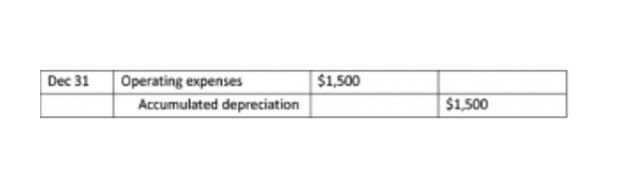
- If, for example, the company forecasts that 200 seats must be replaced under warranty for $50, the firm posts a debit (increase) to warranty expense for $10,000 and a credit (increase) to accrued warranty liability for $10,000.
A warranty can also be considered a contingent liability, since there is uncertainty about the exact number of units that will be returned by customers for repair or replacement. A “medium probability” contingency is one that satisfies either, but not both, of the parameters of a high probability contingency. These liabilities must be disclosed in the footnotes of the financial statements if either of the two criteria is true. A contingent liability that is expected to be settled in the near future is more likely to impact a company’s share price than one that is not expected to be settled for several years. Often, the longer the span of time it takes for a contingent liability to be settled, the less likely that it will become an actual liability. The materiality principle states that all important financial information and matters need to be disclosed in the financial statements.
What Is the Journal Entry for Contingent Liabilities?
Google, a subsidiary of Alphabet Inc., has expanded from a search engine to a global brand with a variety of product and service offerings. Like many other companies, contingent liabilities are carried on Google’s balance sheet, report expenses related to these contingencies on its income statement, and note disclosures are provided to explain its contingent liability treatments. Check out Google’s contingent liability considerations in this press release for Alphabet Inc.’s First Quarter 2017 Results to see a financial statement package, including note disclosures.
- To simplify our example, we concentrate strictly on the journal entries for the warranty expense recognition and the application of the warranty repair pool.
- Liquidity and solvency are measures of a company’s ability to pay debts as they come due.
- Contingent liabilities are a type of liability that may be owed in the future as the result of a potential event.
- In our case, we make assumptions about Sierra Sports and build our discussion on the estimated experiences.
- The liability may be disclosed in a footnote on the financial statements unless both conditions are not met.
You should also describe the liability in the footnotes that accompany the financial statements. The existence of the liability is uncertain and usually, the amount is uncertain because contingent liabilities depend (or are contingent) on some future event occurring or not occurring. Examples include liabilities arising from lawsuits, discounted notes receivable, income tax disputes, penalties that may be assessed because of some past action, and failure of another party to pay a debt that a company has guaranteed. When liabilities are contingent, the company usually is not sure that the liability exists and is uncertain about the amount. Contingent liabilities are those that are likely to be realized if specific events occur. These liabilities are categorized as being likely to occur and estimable, likely to occur but not estimable, or not likely to occur.
Product warranties will be recorded at the time of the products’ sales by debiting Warranty Expense and crediting to Warranty Liability for the estimated amount. A warranty is considered contingent because the number of products that will be returned under a warranty is unknown. If, for example, the company forecasts that 200 seats must be replaced under warranty for $50, the firm posts a debit (increase) to a contingent liability that is probable and for which the dollar amount can be estimated should be warranty expense for $10,000 and a credit (increase) to accrued warranty liability for $10,000. At the end of the year, the accounts are adjusted for the actual warranty expense incurred. Since a contingent liability can potentially reduce a company’s assets and negatively impact a company’s future net profitability and cash flow, knowledge of a contingent liability can influence the decision of an investor.
- According to the full disclosure principle, all significant, relevant facts related to the financial performance and fundamentals of a company should be disclosed in the financial statements.
- Company management should consult experts or research prior accounting cases before making determinations.
- An item is considered material if the knowledge of it could change the economic decision of users of the company’s financial statements.
- The key principle established by the Standard is that a provision should be recognised only when there is a liability i.e. a present obligation resulting from past events.
- Start with a free account to explore 20+ always-free courses and hundreds of finance templates and cheat sheets.
If the lawsuit results in a loss, a debit is applied to the accrued account (deduction) and cash is credited (reduced) by $2 million. Contingent liabilities are also important for potential lenders to a company, who will take these liabilities into account when deciding on their lending terms. Business leaders should also be aware of contingent liabilities, because they should be considered when making strategic decisions about a company’s future. Contingent liabilities are recorded differently based on whether they are probable, reasonably possible, or remote. Do not record or disclose the contingent liability if the probability of its occurrence is remote.
If it does not meet both of these criteria, the contingent liability may still need to be recorded as a disclosure in the footnotes to the financial statements. A company should always aim to present its financial statements fairly and accurately based on the information it has available as of the balance sheet date. Record a contingent liability when it is probable that the loss will occur, and you can reasonably estimate the amount of the loss. If you can only estimate a range of possible amounts, then record that amount in the range that appears to be a better estimate than any other amount; if no amount is better, then record the lowest amount in the range.